
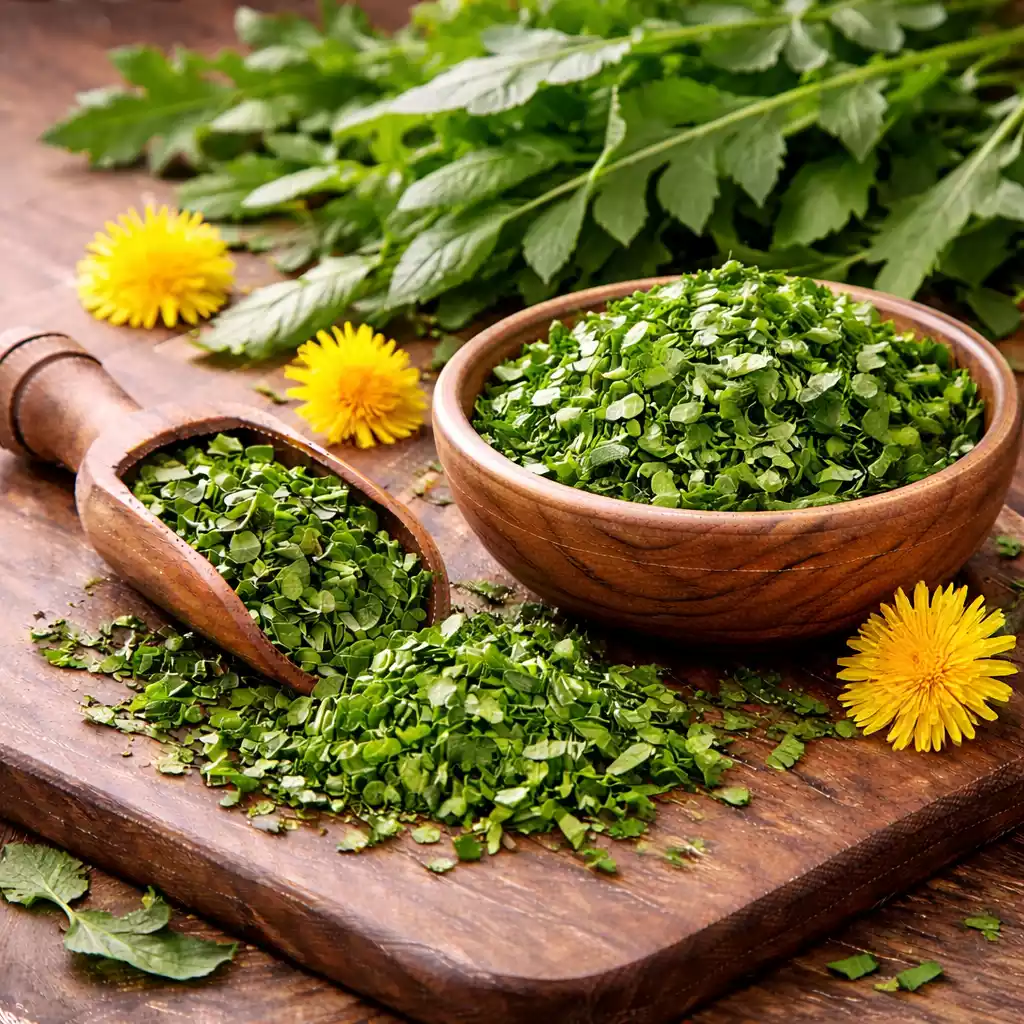
Dandelion leaf is a bold, leafy green botanical known for its assertive, slightly bitter character and earthy freshness. Commonly used in traditional cuisines and foraged cooking, dandelion leaf adds structure and contrast to culinary blends. When incorporated into olive oil or balsamic vinegar infusions, it contributes depth, balance, and a clean, green finish that enhances savory applications.
Flavor Profile
Dandelion leaf delivers a distinctly bitter, grassy flavor with mild peppery and vegetal notes.
-
In olive oil, the bitterness becomes softened and rounded, creating a savory, herb-forward infusion.
-
In balsamic vinegar, the acidity tempers the bitterness, resulting in a balanced infusion with crisp, green complexity.
Its flavor profile makes it ideal for blends that benefit from contrast and structure.
Culinary Uses (Olive Oil & Balsamic Vinegar)
Dandelion leaf is well suited for savory and herb-driven culinary applications:
-
Infused olive oil for drizzling over roasted vegetables and grains
-
Balsamic vinegar infusions for robust vinaigrettes
-
Dressings for leafy greens and bitter salads
-
Savory sauces and marinades
-
Pairings with garlic, citrus peel, and bold herbs
Dandelion leaf pairs especially well with lemon peel, garlic, rosemary, thyme, mustard seed, and mild chilies.
Why Dandelion Leaf Works Well in Infusions
The fibrous leaf structure of dandelion allows for steady extraction during infusion, making it suitable for controlled flavor development. Olive oil captures its herbal bitterness and savory notes, while balsamic vinegar enhances balance by softening sharp edges.
As an infused ingredient, dandelion leaf acts as a structural botanical, adding bitterness and depth that anchors brighter or sweeter components within a blend.