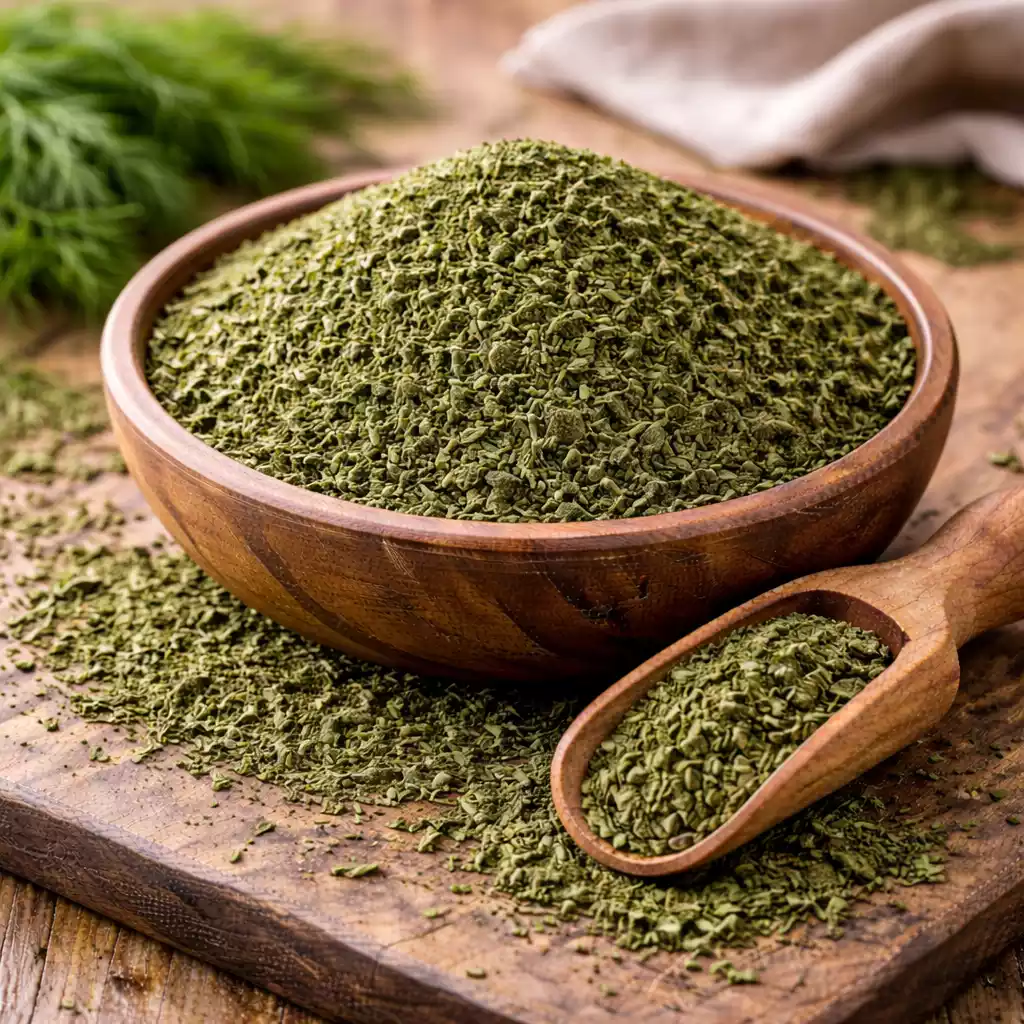
Dill Weed is a distinctive culinary ingredient valued for its aroma, flavor contribution, and versatility. In Garden Infuzions-style blending, dill weed is used to build profiles that work in both infused olive oil and balsamic vinegar, supporting savory applications, finishing drizzles, and recipe-friendly pairings.
Flavor Profile
Dill is bright, herbal, and slightly grassy with a clean finish. In balsamic vinegar it reads tangy and fresh; in olive oil it becomes smooth and aromatic—excellent for pickle-style profiles.
Culinary Uses in Olive Oil
Dill Weed infused olive oil is well-suited for savory cooking, finishing drizzles, and recipe-ready pairings, including:
- Finishing drizzle for pasta, bowls, and roasted vegetables
- Bread dipping and bruschetta-style applications
- Marinades for chicken, fish, and vegetables
- Sauces and aioli-style emulsions
- Egg dishes and savory breakfast applications
Culinary Uses in Balsamic Vinegar
Dill Weed infused balsamic vinegar shines in dressings, marinades, glazes, and reductions, including:
- Bright vinaigrettes and herb-forward dressings
- Marinades for chicken, fish, tofu, and vegetables
- Finishing drizzle over tomatoes, cucumbers, and salads
- Pickle-style applications and slaws
- Reduction into quick pan sauces
Health & Functional Benefits
Dill Weed contains naturally occurring compounds that contribute to both flavor and functional value:
- Digestive Support: Aromatic spices and seeds are commonly used to support digestion and comfort after meals.
- Antioxidant Activity: Many herbs and spices provide antioxidant compounds that help combat oxidative stress.
- Seasoning Efficiency: Concentrated aromatics help deliver flavor with less added sodium or sugar.
- Functional Compounds: Natural plant compounds may support overall wellness as part of a balanced diet.
- Aromatic Benefits: Strong aroma can support appetite appeal and sensory enjoyment of food.
Why Dill Weed Works Well in Olive Oil & Balsamic Vinegar Infusions
Dill Weed performs exceptionally well in infusions because its aromatic oils translate cleanly into both olive oil and balsamic vinegar. Olive oil captures a round, herb-forward profile for drizzling and cooking, while balsamic vinegar highlights brightness and lift—excellent for vinaigrettes and finishing.