
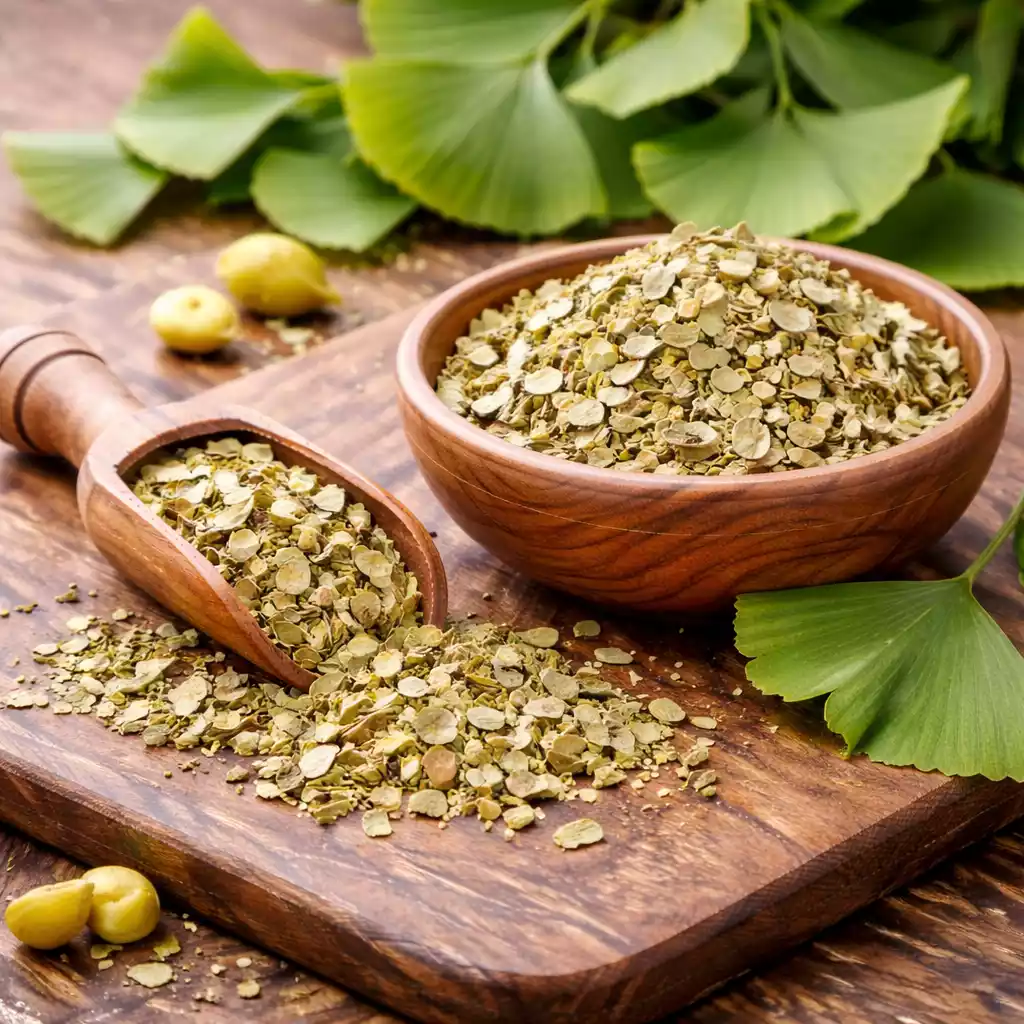
Ginkgo biloba is one of the oldest known tree botanicals, valued for its distinctive leaf shape and subtle, earthy character. While most commonly recognized in traditional preparations, ginkgo biloba can also be used thoughtfully as a culinary botanical when infused into olive oil or balsamic vinegar, adding a mild bitterness and herbal depth that complements savory and aromatic blends.
Flavor Profile
Ginkgo biloba has a delicate, slightly bitter flavor with soft vegetal and herbaceous notes. When infused into olive oil, its bitterness becomes muted and balanced, contributing an understated earthiness. In balsamic vinegar, the natural acidity softens its sharper edges, allowing subtle green and tea-like qualities to emerge.
Culinary Uses (Olive Oil & Balsamic Vinegar)
Ginkgo biloba works best as a supporting botanical in refined blends rather than a primary flavor:
-
Herb-forward olive oil blends
-
Savory vinaigrettes and infused vinegars
-
Light drizzles for roasted vegetables
-
Botanical-inspired finishing oils
-
Pairing blends with citrus peel, ginger, or mild herbs
It pairs well with lemon peel, ginger, rosemary, green tea notes, and light floral botanicals.
Why Ginkgo Biloba Works Well in Infusions
The thin leaf structure of ginkgo biloba allows for efficient extraction during infusion, especially when dried properly. Its restrained flavor profile makes it ideal for layered blends where complexity is desired without dominance.
In olive oil infusions, ginkgo biloba contributes subtle structure and balance. In balsamic vinegar, it adds gentle bitterness that enhances depth and contrast, making it suitable for modern botanical culinary applications.